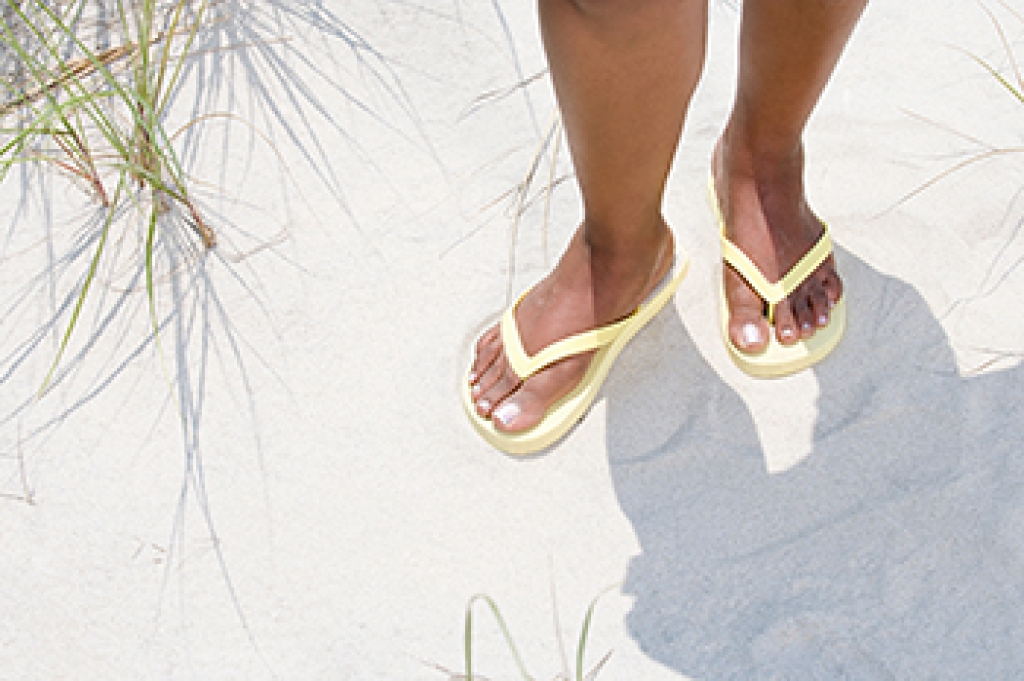
Flip-flops are popular because they are lightweight and easy to wear. However, their simple design may affect how the feet move during walking. Many flip-flops have thin, flexible soles and little support around the heel. Unlike shoes that stay securely attached to the foot, flip-flops often require the toes to grip the sole with each step. This gripping action may change normal walking patterns and increase the work performed by certain foot muscles. Some people also take shorter steps or adjust their stride while wearing them. Although flip-flops may feel comfortable for brief periods, frequent use may place additional demands on the feet. Understanding how this type of footwear influences movement helps explain why shoe choice matters for foot health.
The effects of flip-flops vary depending on their design, how long they are worn, and the individual's foot structure. Limited cushioning may leave the heel less protected from repeated impact on hard surfaces. A lack of arch support may contribute to discomfort in people whose feet need additional stability. Because flip-flops do not hold the heel firmly, the foot may shift while walking, especially on uneven ground. This movement may affect balance and make it easier to stumble. Some individuals notice soreness in the toes or along the bottom of the foot after wearing flip-flops for extended periods. Others experience heel pain or fatigue during activities that involve considerable walking. These symptoms do not occur in everyone, and different flip-flop designs may affect movement differently. Still, persistent discomfort may signal that the footwear is not providing enough support for a person's needs.
A podiatrist evaluates foot pain associated with wearing flip-flops by examining foot alignment, walking patterns, and areas of tenderness. The examination may reveal whether the toes are working excessively to keep footwear in place or whether limited support contributes to discomfort. Podiatric care includes recommendations for footwear with a secure fit, appropriate cushioning, and better stability. When symptoms involve the arch or heel, a podiatrist assesses the underlying structures and develops a treatment plan based on the findings. The goal is to improve comfort while reducing strain during everyday movement. Footwear recommendations depend on the individual's foot shape and activity demands rather than appearance alone. If you are experiencing recurring foot pain or walking discomfort related to wearing flip-flops, it is suggested that you consult a podiatrist for an evaluation and appropriate treatment options.
Flip-flops can cause a lot of problems for your feet. If you have any concerns about your feet or ankles, contact Deann Hofer Ogilvie, DPM from Ascend Foot & Ankle Center. Our practitioner will assist you with all of your foot and ankle needs.
Flip-Flops and Feet
Flip-flops have managed to become a summer essential for a lot of people. While the shoes may be stylish and easy to slip on and off, they can be dangerous to those who wear them too often. These shoes might protect you from fungal infections such as athlete’s foot, but they can also give you foot pain and sprained ankles if you trip while wearing them.
When Are They Okay to Wear?
Flip-flops should only be worn for very short periods of time. They can help protect your feet in places that are crawling with fungi, such as gym locker rooms. Athlete’s foot and plantar warts are two common fungi that flip-flops may help protect your feet against.
Why Are They Bad for My Feet?
These shoes do not offer any arch support, so they are not ideal for everyday use. They also do not provide shock absorption or heel cushioning which can be problematic for your feet. Additionally, you may suffer from glass cuts, puncture wounds, and stubbed toes since they offer little protection for your feet.
More Reasons Why They Are Bad for Your Feet
- They Slow You Down
- May Cause Blisters and Calluses
- Expose Your Feet to Bacteria
If you have any questions, please feel free to contact our office located in Lafayette, CO . We offer the newest diagnostic and treatment technologies for all your foot care needs.
